The Transport Crisis
In the early twentieth century, the Sulcis-Iglesiente region was a major extraction area for lead and zinc. Raw ore from the Masua mines had to be shipped to smelters in mainland Europe. The logistics were slow and expensive. The coastline is also dotted with other monumental ruins from this era, notably Laveria Lamarmora and Pan di Zucchero.
Miners carried the heavy ore on their backs down steep coastal paths to Masua Beach. From there, sailors loaded the minerals by hand onto small wooden sailing boats, known as bilancelle. These boats travelled 30 kilometres (18.6 miles) to the warehouses on San Pietro Island, where large cargo ships anchored.
The sailing boats were light and could not travel during stormy winter weather. The manual loading process took weeks for a single cargo ship, causing frequent delays and high storage costs.
Cesare Vecelli's Vision
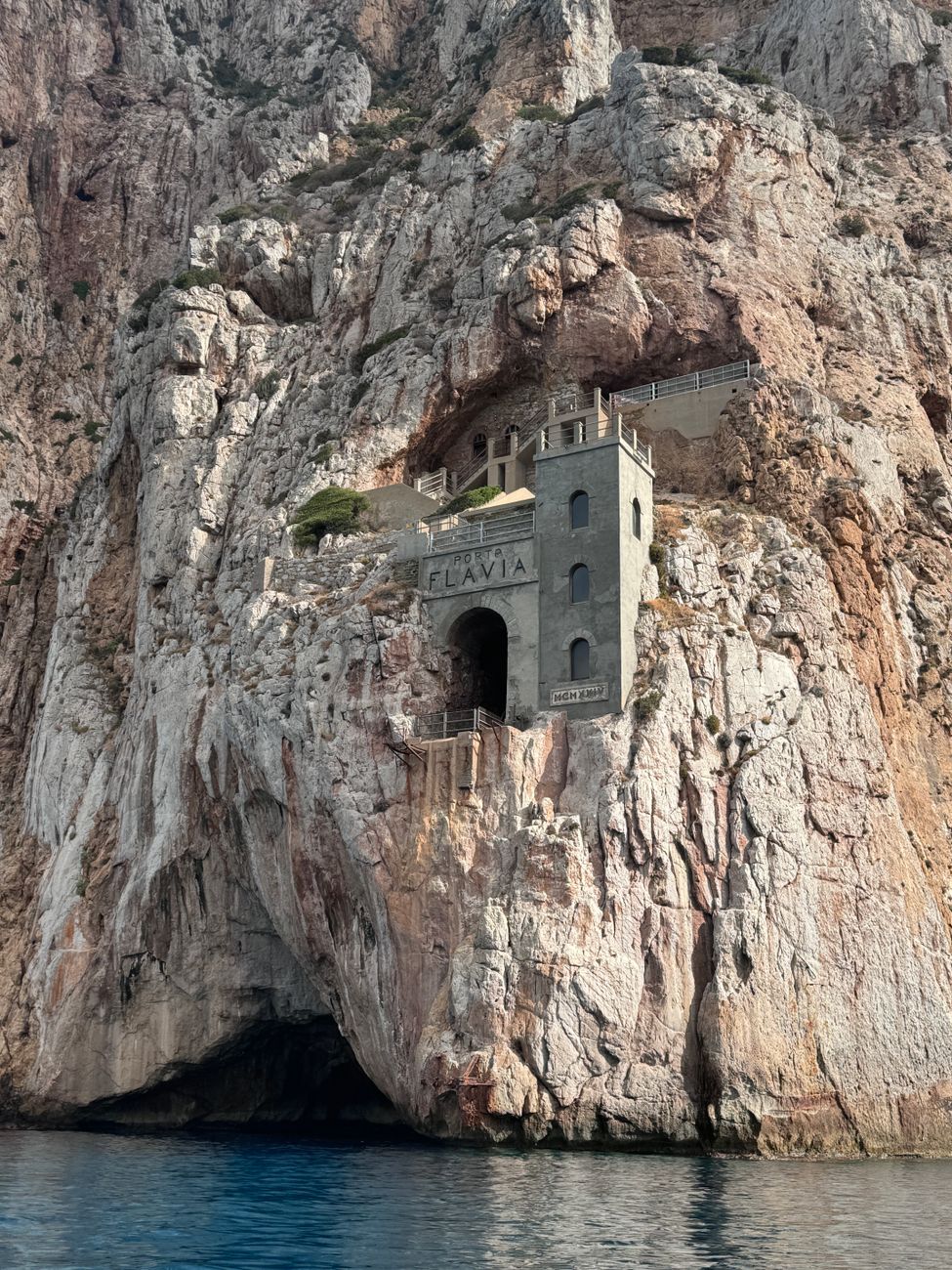
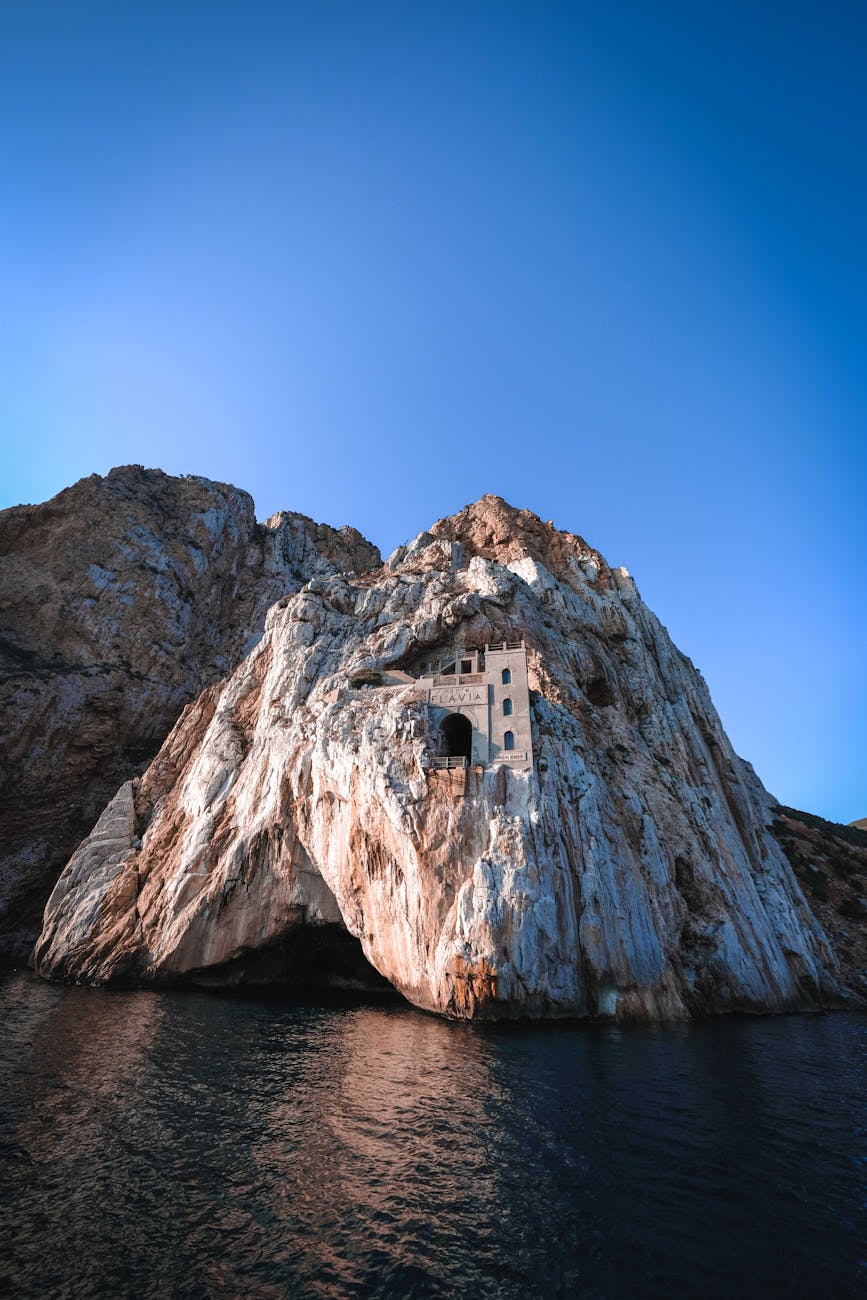
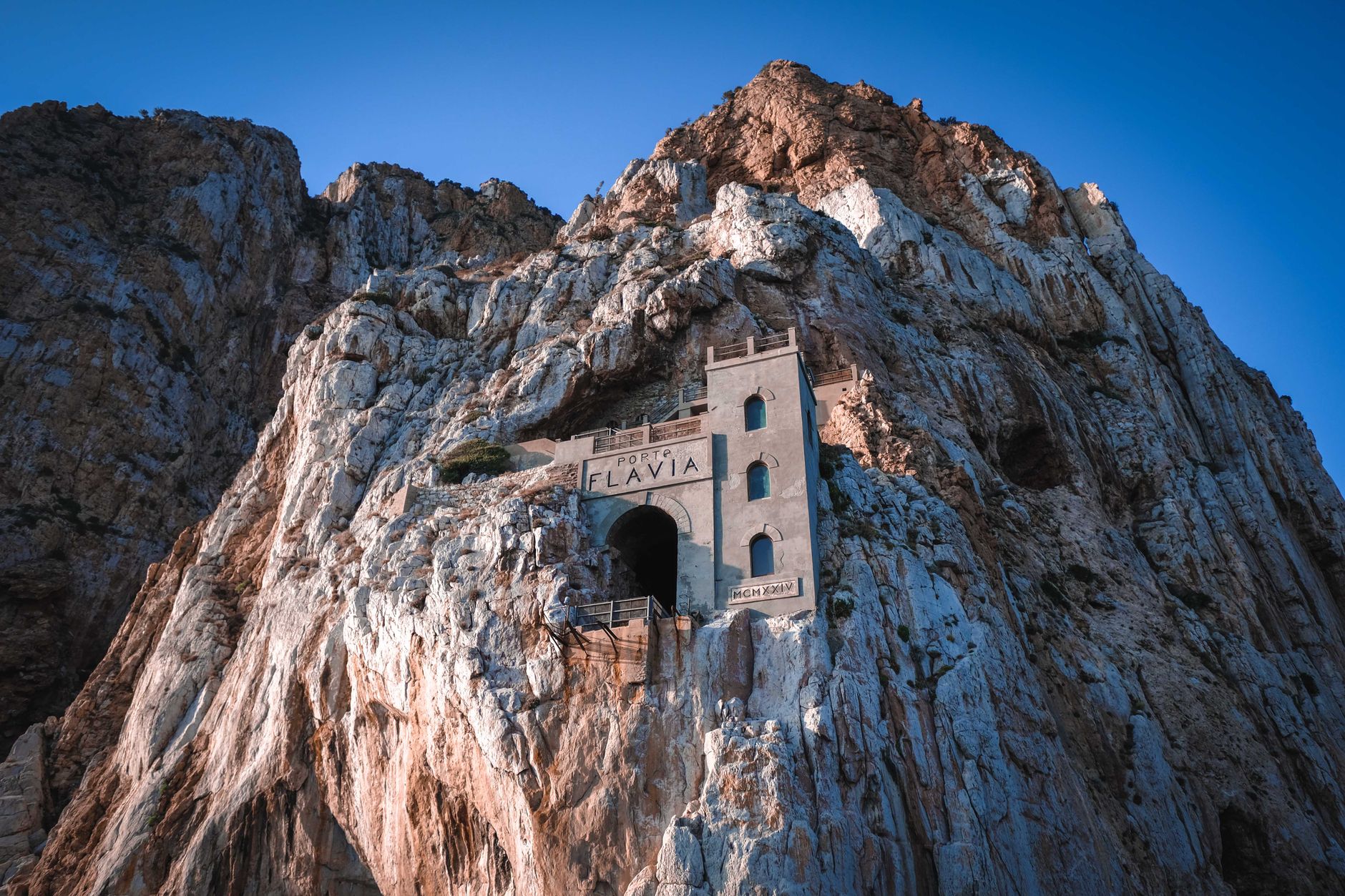
In 1924, the Vieille Montagne mining company commissioned the Italian engineer Cesare Vecelli to find a solution. Vecelli designed a harbor built directly inside the cliffs of Masua. He named the site Porto Flavia in honor of his eldest daughter, Flavia. Today, visitors can walk through these historical cliff galleries on the official guided Porto Flavia tour.
Miners used dynamite and hand drills to carve two parallel horizontal tunnels, each 600 metres (1,968 feet) long, through the limestone cliff. The tunnels lay directly above one another. Between the two galleries, workers excavated nine massive vertical silos in the rock. The silos could hold up to 10,000 tons of raw ore.
Alessandro Melis notes that his grandfather had deep respect for Cesare Vecelli, who was the engineer of the historical mining tunnels he worked in.
How the Loading Terminal Operated
1. The Upper Tunnel
Electric trains loaded with raw ore ran along the upper tunnel from the Masua mine shafts. The train wagons dumped the minerals directly into the openings of the nine silos. The material remained stored in the vertical rock reservoirs until a cargo ship arrived at the coast.
2. The Rock Silos
The silos were vertical chambers hollowed out of the living rock. Each reservoir was approximately 15 metres (49 feet) deep. Their position directly above the lower tunnel allowed gravity to move the ore down without mechanical hoisting systems.
3. The Lower Tunnel
The lower tunnel housed an advanced conveyor belt system beneath the silo outlets. Gates at the bottom of each silo controlled the flow of ore. When a ship anchored directly under the cliff face, the conveyor belt collected the minerals from the silos and transported them to the exit.
4. The Extendable Conveyor Belt
At the end of the lower gallery, a steel conveyor boom extended 15 metres (49 feet) out of the cliff face, pouring the ore directly into the ship's hold. The entire process took just two days to load a 10,000-ton vessel, reducing shipping costs by ninety percent.
The Neo-Gothic Facade
The exit of the upper tunnel on the cliff face is decorated with an elegant concrete facade. Cesare Vecelli designed the structure in a neo-Gothic style, featuring arched windows and a central tower. The name "Porto Flavia" is written in bold letters above the main opening.
The facade includes a small balcony that stands 15 metres (49 feet) above the sea, offering direct views of the Pan di Zucchero sea stack. This architectural detail served as a welcome area for dignitaries visiting the mine.
The harbor remained in operation until the late 1960s. As the mining activities in the region declined and shipping methods changed, the tunnels were closed. The municipal tourism authority restored the galleries in the early 2000s, opening the site for industrial archaeology tourism. For detailed transit directions and bus timetables to the trailhead, see our how to get there guide.