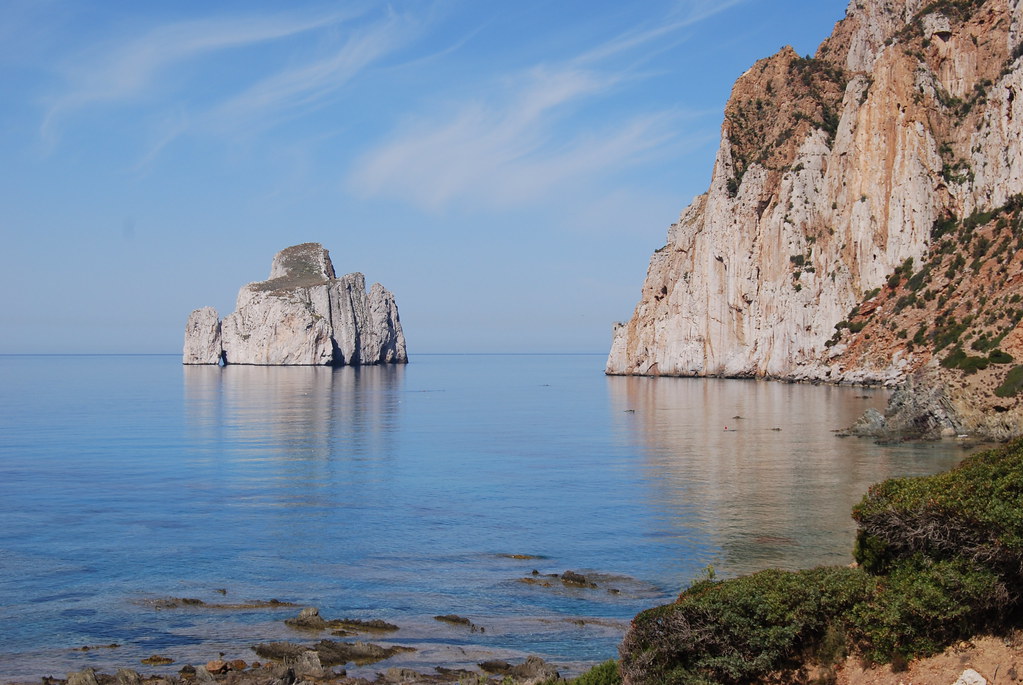
Pan di Zucchero Sea Stack
This massive limestone sea stack stands directly in front of the Porto Flavia cliff balcony. It rises 133 metres (436 feet) out of the sea, making it the highest sea stack in the Mediterranean. The best way to experience its scale and sea caves is on a guided Masua boat tour.
The geological formation consists of ancient Cambrian limestone. Climbers visit the rock to scale its sheer walls, whilst other travellers view it from Masua Beach or take a boat excursion to circle the base. The stack features two large natural arches that small boats can navigate through.
Cala Domestica Cove
A spectacular, fjord-like bay situated north of Masua. The beach lies at the end of a deep inlet surrounded by white limestone cliffs. Historically, the cove served as a shipping point for minerals mined in the Buggerru area. It serves as a highlighted swimming stop on the Buggerru coastal dinghy tour.
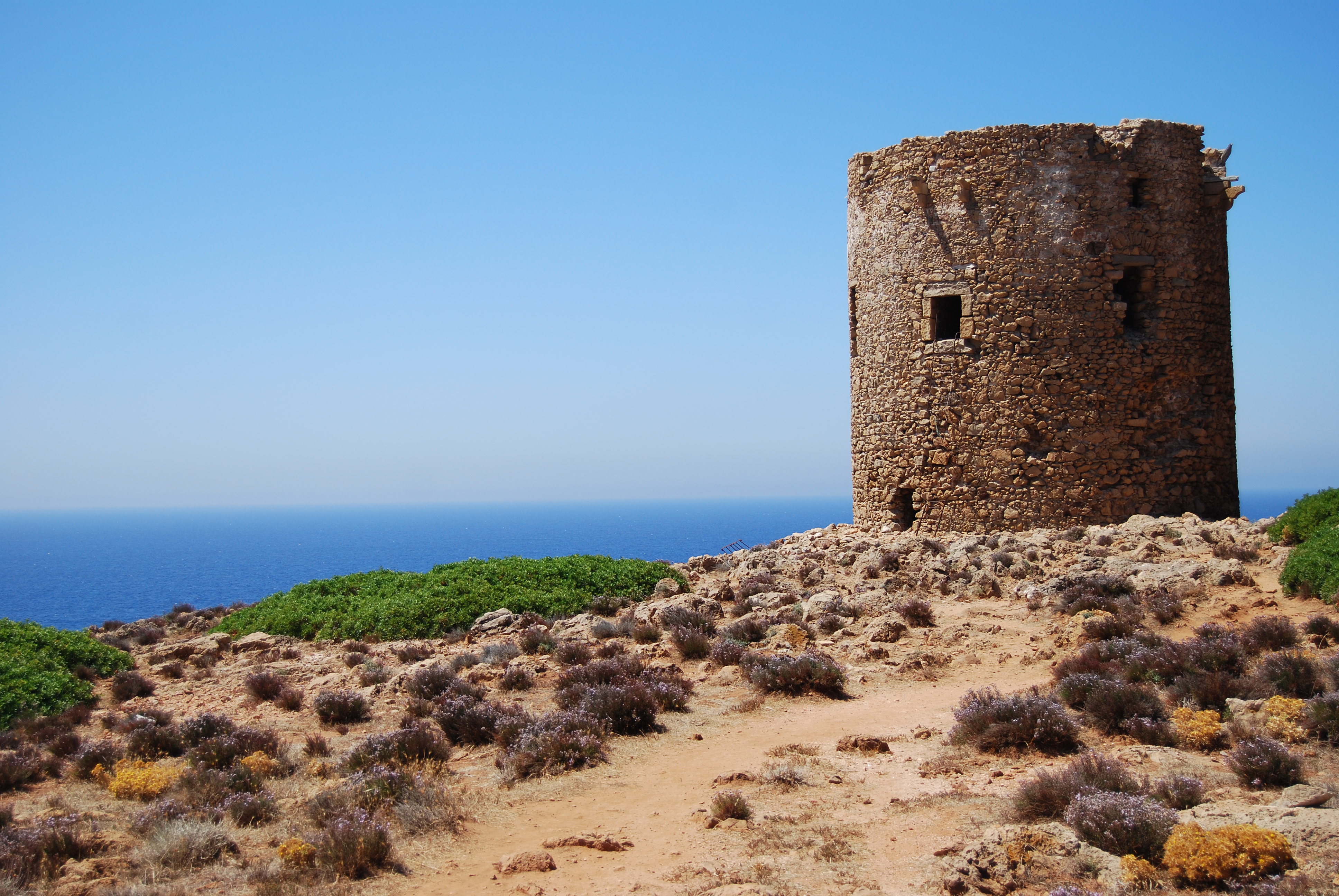
The main beach is sandy, with shallow waters that are ideal for swimming. A small foot tunnel carved into the rock on the right side of the beach leads to a secondary, secluded cove called La Caletta. The ruins of a Spanish watchtower stand on the headland, accessible via a steep coastal path.
Nebida & Laveria Lamarmora
Nebida is a former mining village perched on the cliffs. It is famous for the Laveria Lamarmora, a historic mineral concentration plant built in 1897. The brick ruins of the plant cascade down the steep cliff face directly above the sea, showing four distinct terraces.
A scenic walking path, the Belvedere of Nebida, circles the headland, providing views of five coastal sea stacks, including the golden-colored Porto Banda stack. Accessing the Laveria ruins requires descending a flight of 400 concrete steps from the main path.
More Local Highlights
Masua & Porto Cauli Beaches
Distance: 0.2 km (0.12 miles) from ticket office.
These two adjacent sandy beaches lie directly below the mining tunnels. Masua Beach has shallow waters suitable for families, whilst Porto Cauli is popular with local surfers and has sunbed rentals and a beach cafe.
Grotta di Santa Barbara
Distance: 15 km (9.3 miles) Inland.
A unique cave discovered inside the San Giovanni mine in 1952. The cave walls are covered with dark brown barite crystals and white stalactites, forming a subterranean chamber. Access is via a small electric mine train.
Nebida to Masua Coast Walk
Distance: 5 km (3.1 miles) Trail.
A challenging section of the Cammino Minerario di Santa Barbara. The trail follows the cliff edge from Nebida to Masua, passing through mining ruins and scrub forest. Offers views of Pan di Zucchero stack.
Carloforte & San Pietro Island
Distance: 22 km (13.7 miles) to Portovesme Ferry.
A historic town founded by Ligurian coral fishers in the eighteenth century. Features a dialect similar to Genoese, narrow streets, and the Girotonno food festival in late May. Accessible via a 40-minute ferry ride.